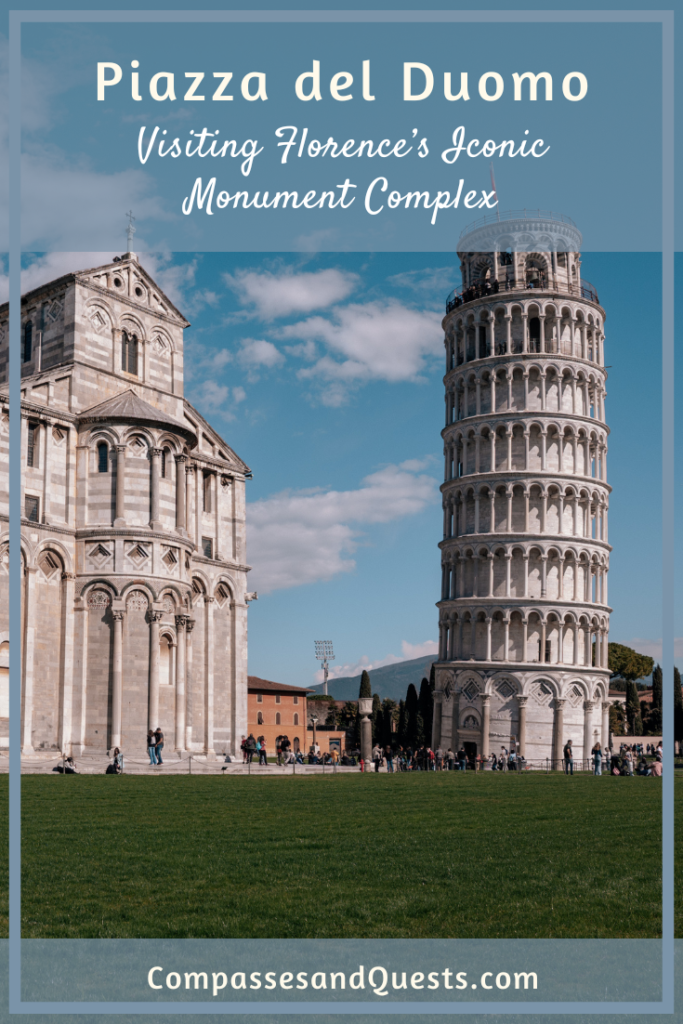
If you find yourself in the Italian city of Pisa, chances are you’re here to see the Leaning Tower of Pisa. This architectural marvel draws people in from all over the world! The tower itself is, of course, interesting to see, but the museums and monuments around the tower are also worth a visit for a deeper look into the city and tower’s history. Here, we’ll go over the details needed to plan a visit.
Getting to Pisa’s Piazza del Duomo
Many travelers visit Pisa as a day trip from Florence. This is what we did as well! We took the train from the Santa Maria Novella station in Florence to Pisa Centrale early in the morning and returned to Florence that evening.
Once in Pisa, you can reach the Piazza del Duomo on foot in about 20-25 minutes. We chose to walk because we wanted to see more of the city. If you don’t want to walk, you can also take the bus. There are multiple stations around Piazza del Duomo, including the Torre 1 stop, which is served by bus lines 1+, 21, 60, 70, 80, and more that run from just in front of Pisa Centrale.
If driving your own vehicle, you can also park at one of the several paid lots on the west side of the plaza, such as the Pisa Tower Parking lot.

Tickets to the Leaning Tower of Pisa & Other Monuments
There are multiple ticket options to consider that depend on the monuments you want to visit. Note that with any ticket that includes access to the Leaning Tower, you need to reserve a time slot for the tower entrance.
Complete + Tower: €27 – includes entry to the Leaning Tower, cathedral, baptistery, Camposanto, Opera Museum, Sinopie Museum, and temporary exhibitions (when available). This is the ticket we opted for.
Cathedral + Tower: €20 – includes entry to the Leaning Tower and cathedral.
Complete: €11 – includes entry to the cathedral, baptistery, Camposanto, Opera Museum, Sinopie Museum, and temporary exhibitions (when available).
Other two-site combinations: €8 – there are multiple tickets that grant entry to a combination of the cathedral and one of the previously-mentioned sites, not including the tower.
Cathedral Pass: If you just want to visit the cathedral, it is free to do so, but you must visit the ticket office before your visit to reserve a time slot. Visits to just the cathedral cannot be reserved online.
You can buy tickets online up to 90 days in advance or at the ticket office on the day of your visit. We’d recommend buying them online in advance, especially during peak season, to guarantee entrance to the sites you want to see and avoid ticketing lines. Otherwise, we’d recommend getting to the ticket office early. For more information on ticket options and to buy tickets, visit the official website.
Bring your passport or ID in case you’re asked to present it with your ticket.
Regulations
Large bags and luggage are not permitted in these sites. While small backpacks and purses are fine for most sites, the tower does not permit any bags at all. There is a free cloakroom near the tower to store these items. Note that the lockers are not big enough for luggage.
The cathedral is a place of worship and visitors must dress accordingly. For both men and women, shoulders must be covered, clothing must not be too short or revealing, and hats must be removed.
Visitors cannot consume food or drink in the monuments. Photography is allowed in most locations for personal use, unless otherwise specified.
Hours
The Leaning Tower of Pisa, baptistery, Camposanto, Opera Museum, and Sinopie Museum are open daily from 9am to 6pm. The cathedral is open to visitors daily from 10am to 6pm. These hours can vary depending on religious ceremonies, maintenance, and other events, so check the website for updates before your visit.
Visiting Pisa’s Piazza Del Duomo Monument Complex
The monuments of Pisa’s Piazza del Duomo offer stunning architecture and a look into the city’s interesting history. We know the Leaning Tower of Pisa is the plaza’s star attraction, but we were genuinely surprised that people seemed to overlook the other monuments and museums. At first we thought that they were fairly empty because we were there on an early weekday morning in the off-season. But even later in the day when the plaza was packed full of people taking pictures of the tower, the museums were quiet.
If you’re interested in learning about why the tower is the way it is, its construction, some of Pisa’s history, etc., we’d recommend making the time to visit the other monuments in addition to the tower.
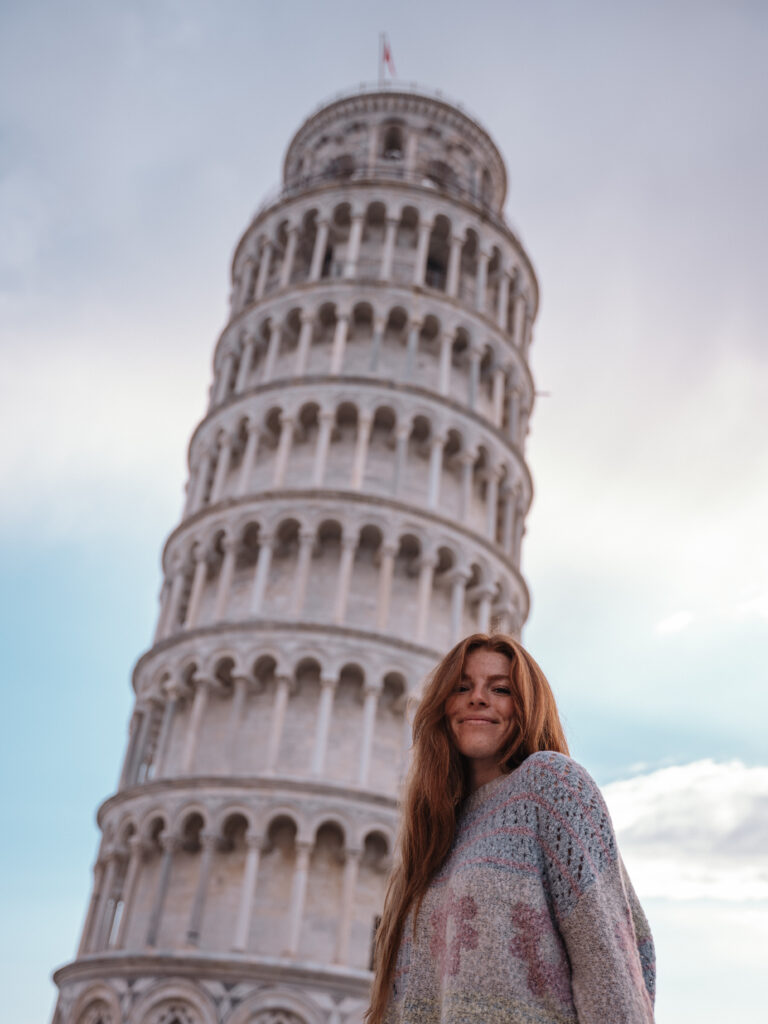
The Leaning Tower of Pisa
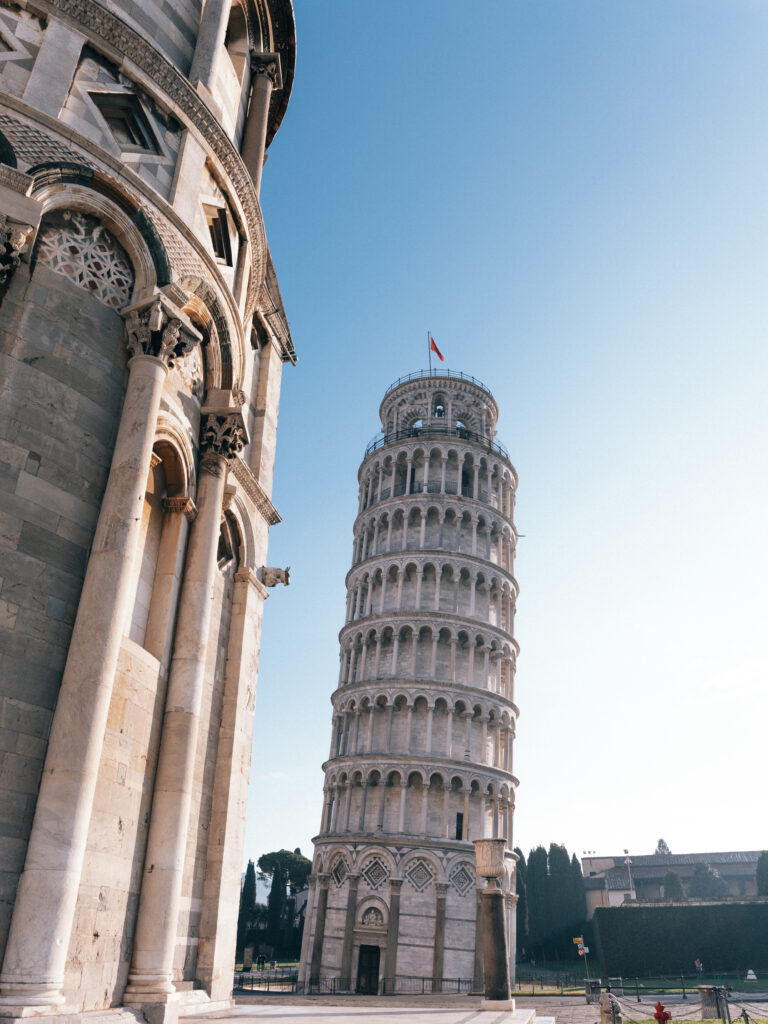
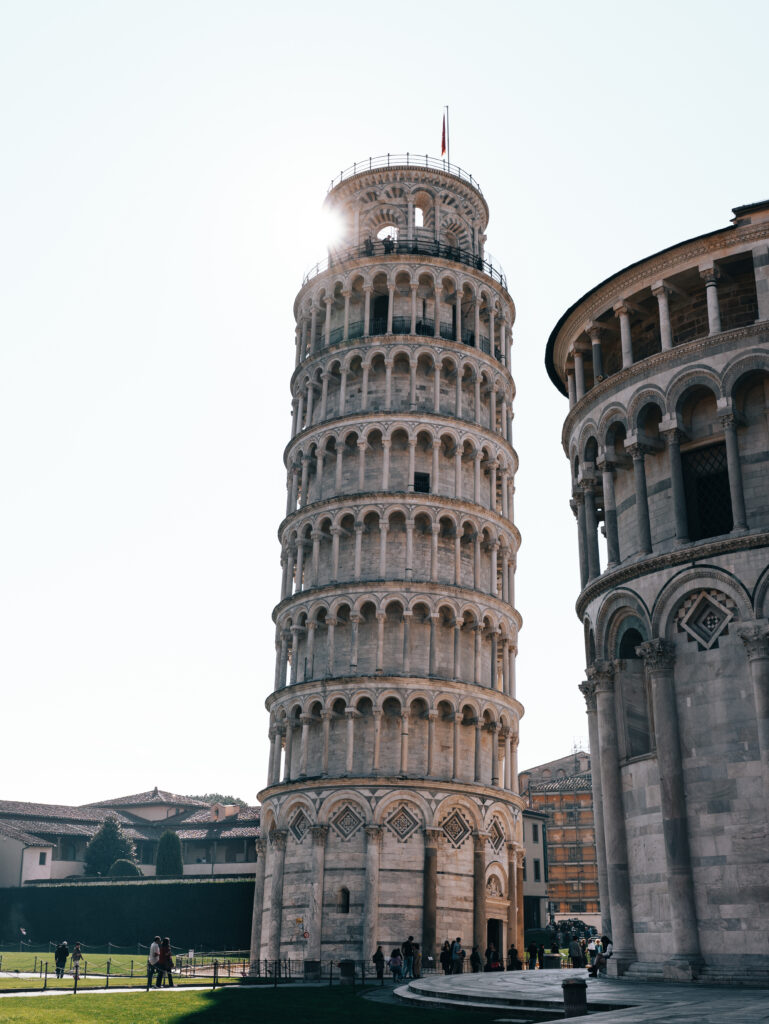
The Leaning tower of Pisa was built to serve as a bell tower to the nearby Cattedrale di Pisa. Construction began on the tower in 1173; however, it was not completed until 1372! War and issues with the foundation that give the tower its famous tilt contributed to the delay in its construction.
After its completion, the tower continued to tilt further over the years. So, the government closed it in 1990 to work to save the structure and make it safe to visit. The tower reopened in 2001. Today, it is Pisa’s most popular attraction. Around 5 million visitors annually flock to the piazza, and around 500,000 climb the tower to take in the views from the top.
The Leaning Tower was our first stop of the day. We climbed the 270-ish marble steps. This was interesting because, due to its tilt, sometimes it felt like walking slightly downhill even though we were going up the steps. The views from the top were gorgeous. We enjoyed our time up there before heading back down to the square.
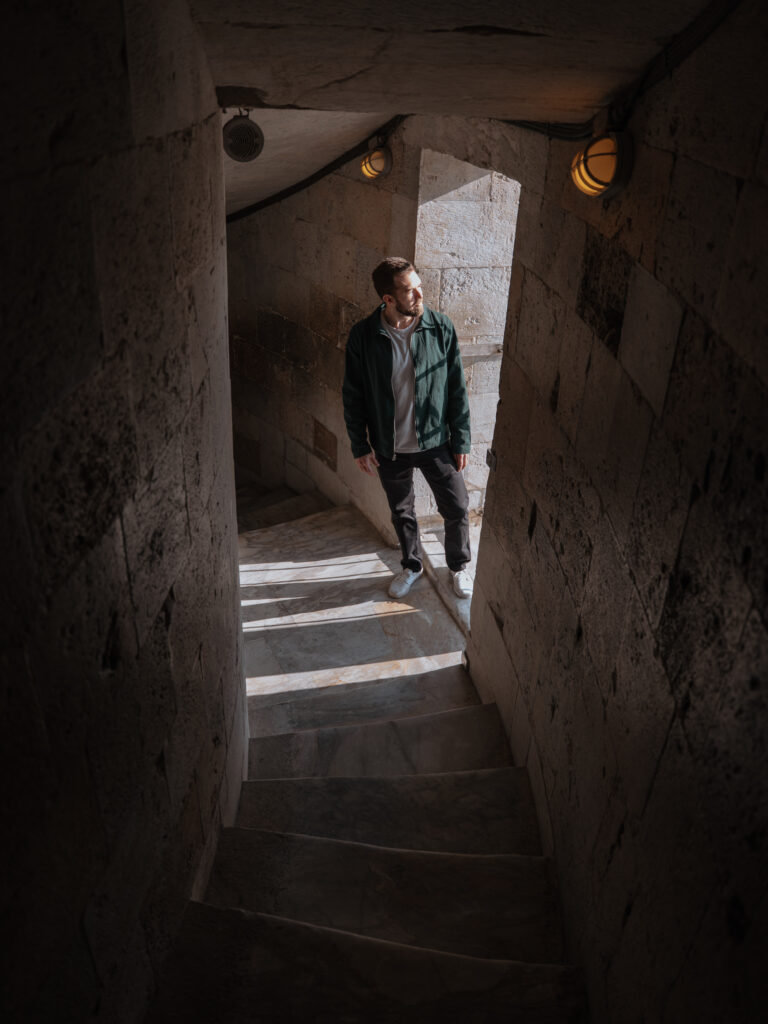
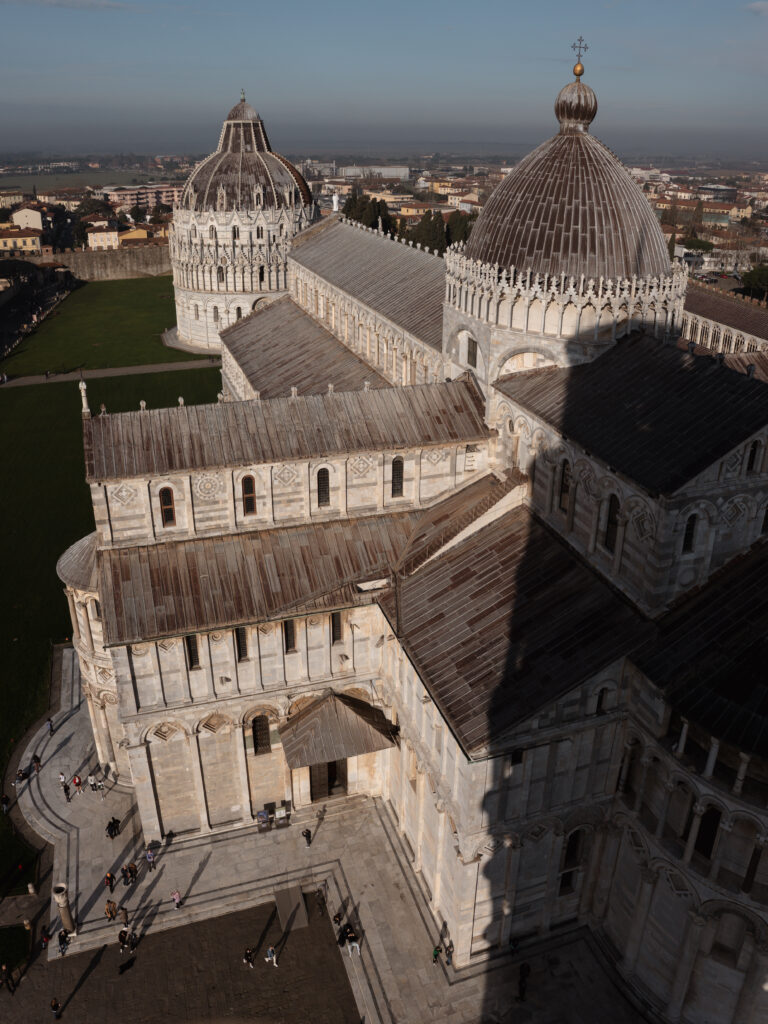
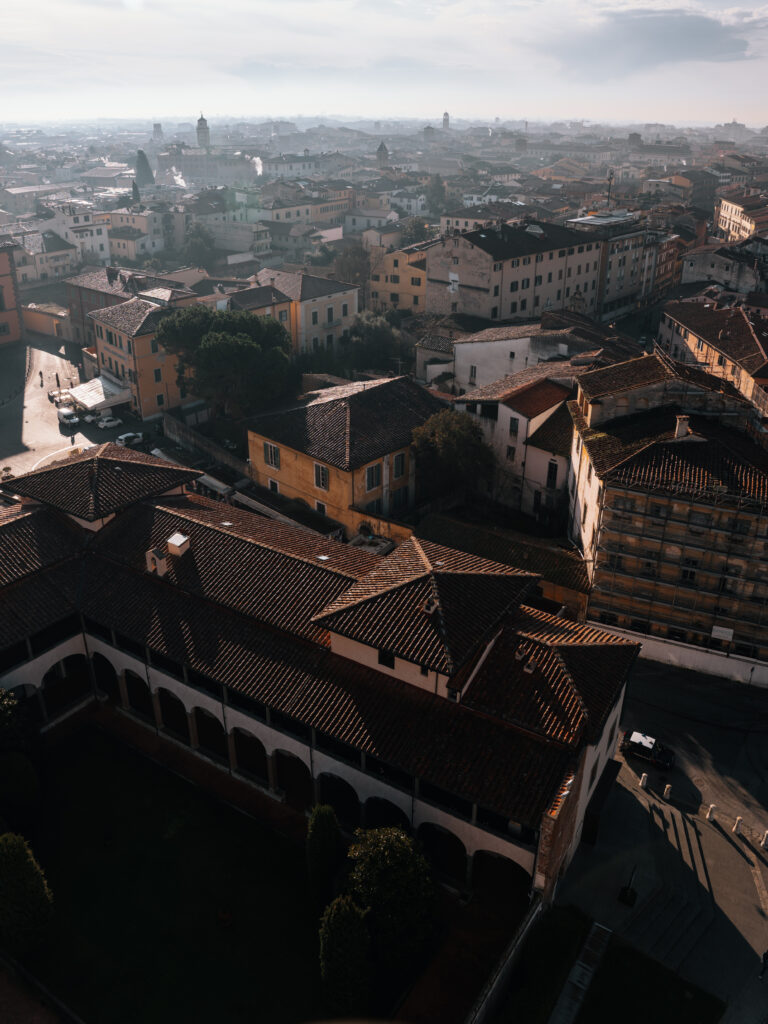
Views from the top of the tower
Camposanto
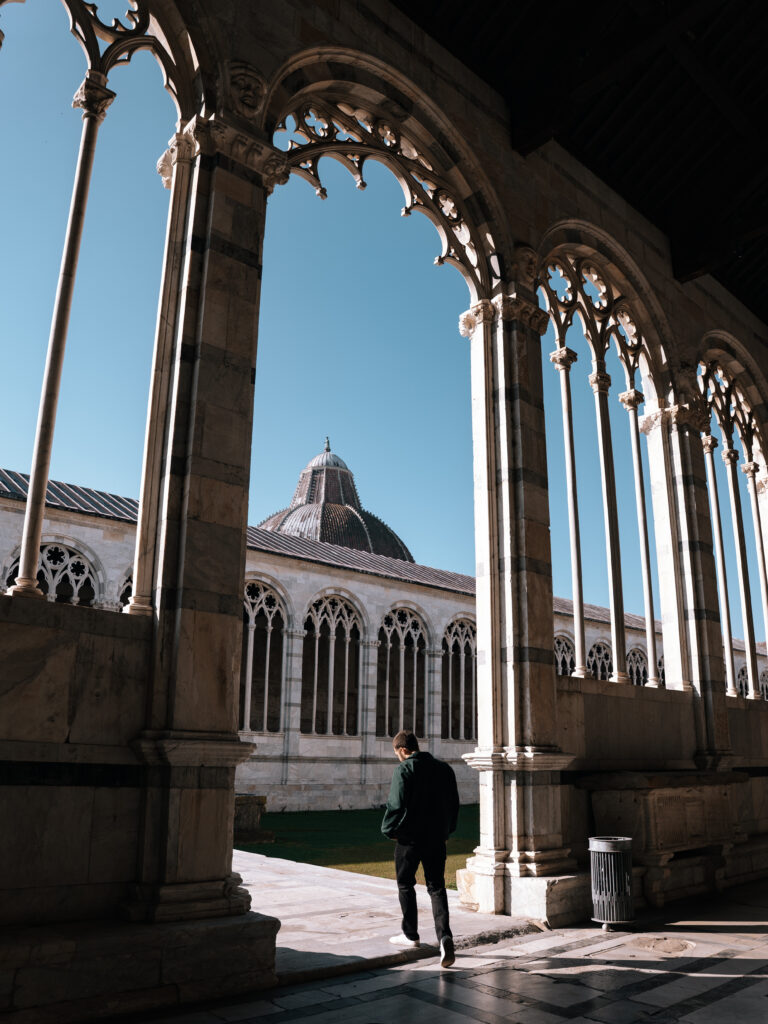
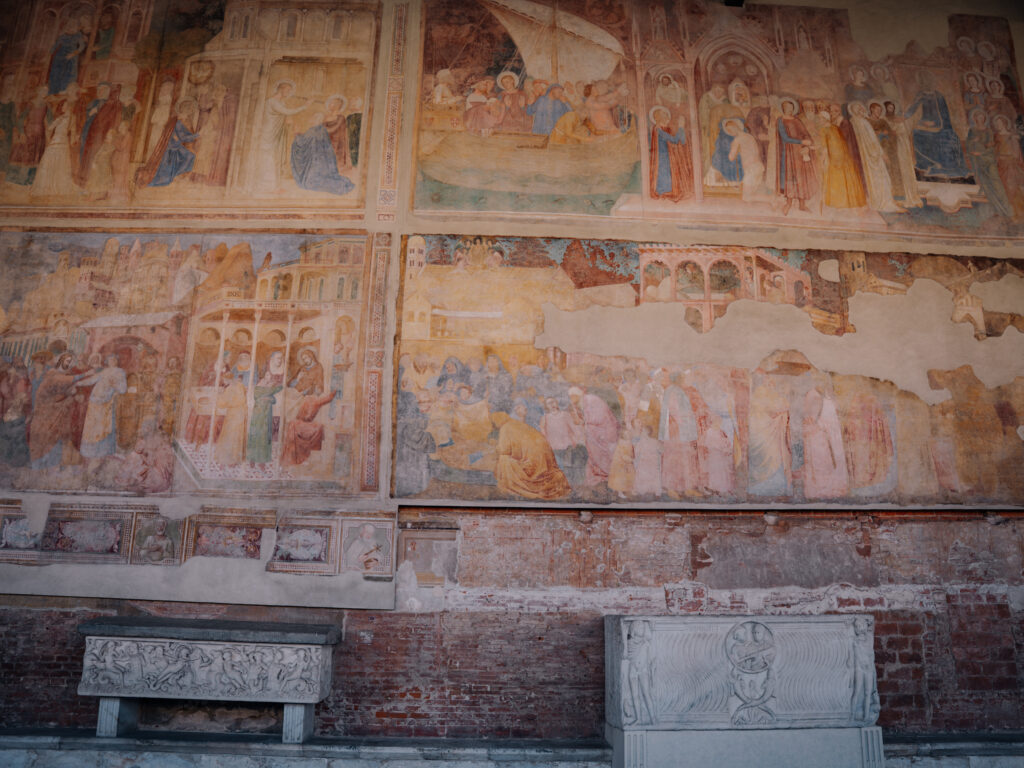
Our next stop after climbing the tower was the Camposanto. This monument was built in 1278. It’s an old burial ground where many wealthier citizens in the area were buried prior to 1780. In addition to its beautiful architecture, it is known for its detailed frescoes, sarcophagi, tombstones, memorials, and intricate sculptures held inside. Much of the memorials were damaged in WWII, but major efforts were taken to restore what could be saved. There’s an audio guide available if you’d like more information on the art, building, and memorials.
It was incredibly peaceful as we walked around the sunny courtyard, admiring all of the detail and art here.

Battistero di San Giovanni
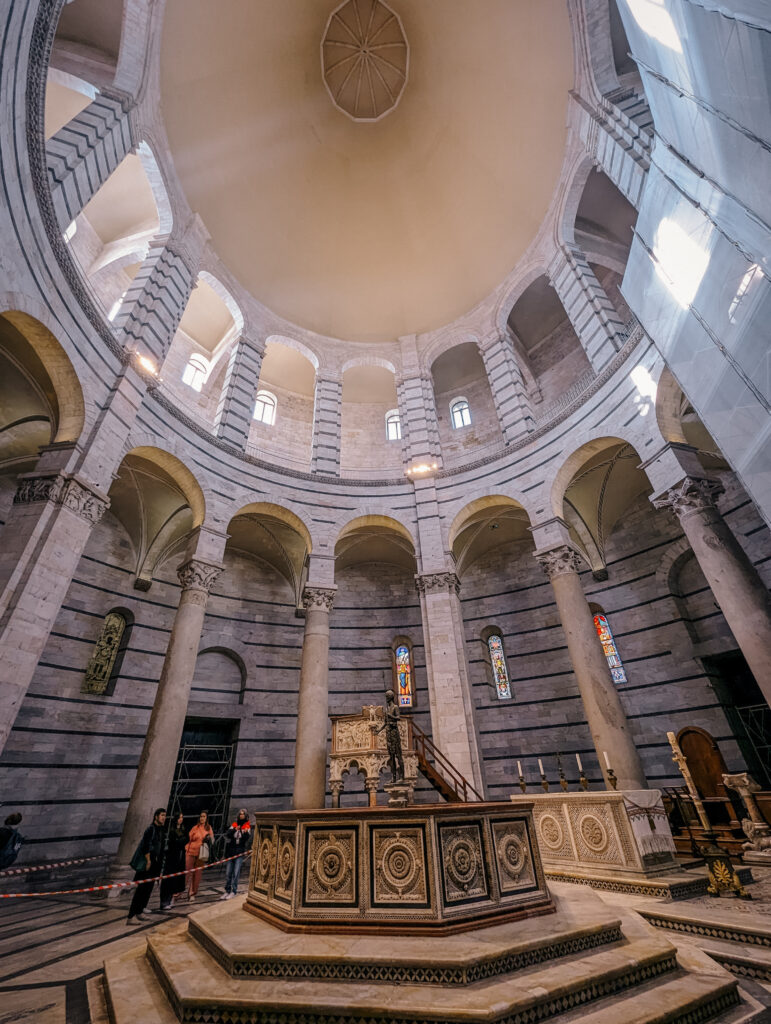
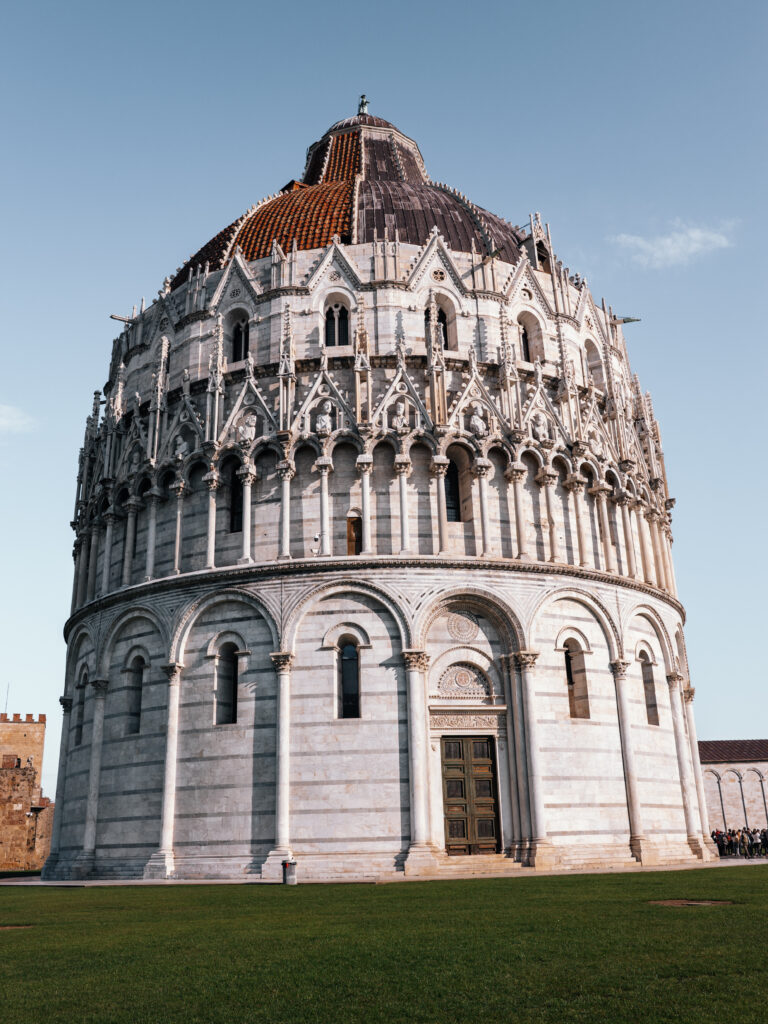
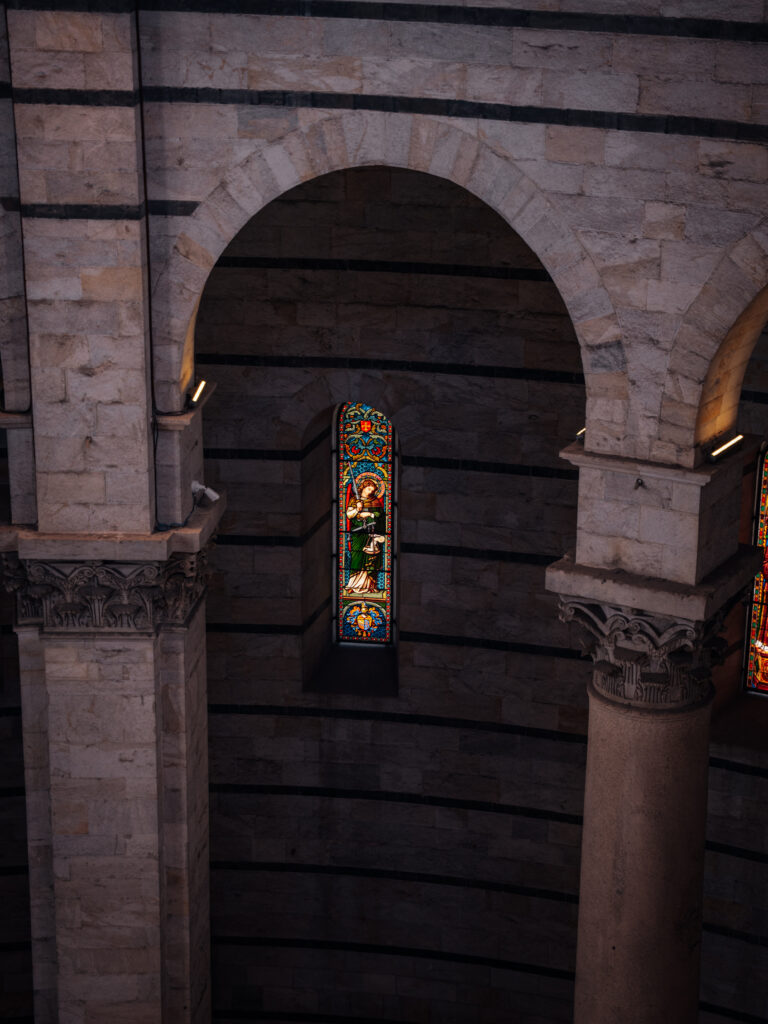
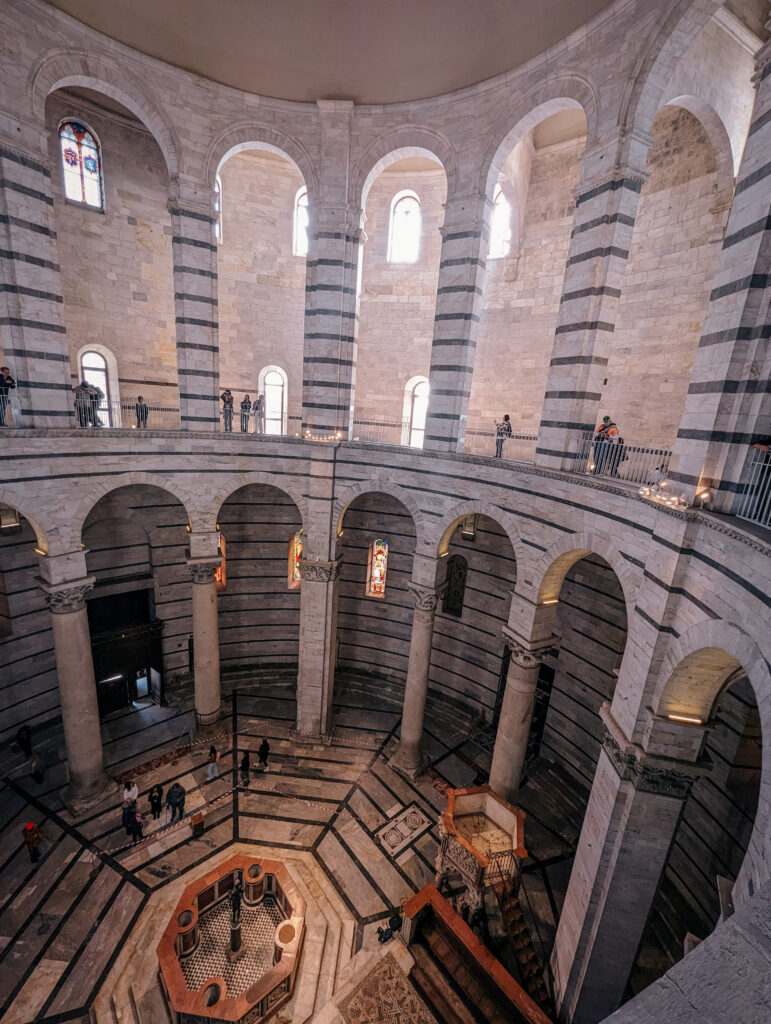
The Baptistery of San Giovanni was built in 1152 to serve as a place to administer baptisms near the beautiful Cattedrale di Pisa. It is the largest baptistery in Italy and is a beautiful building, both inside and out.
The interior contains intricate details and a staircase that allows visitors to climb higher in the building and look down into the central area of the structure. Every 30mins, a staff member sings a few notes to highlight the incredible acoustics in there. It was pretty cool to hear!
Cattedrale di Pisa
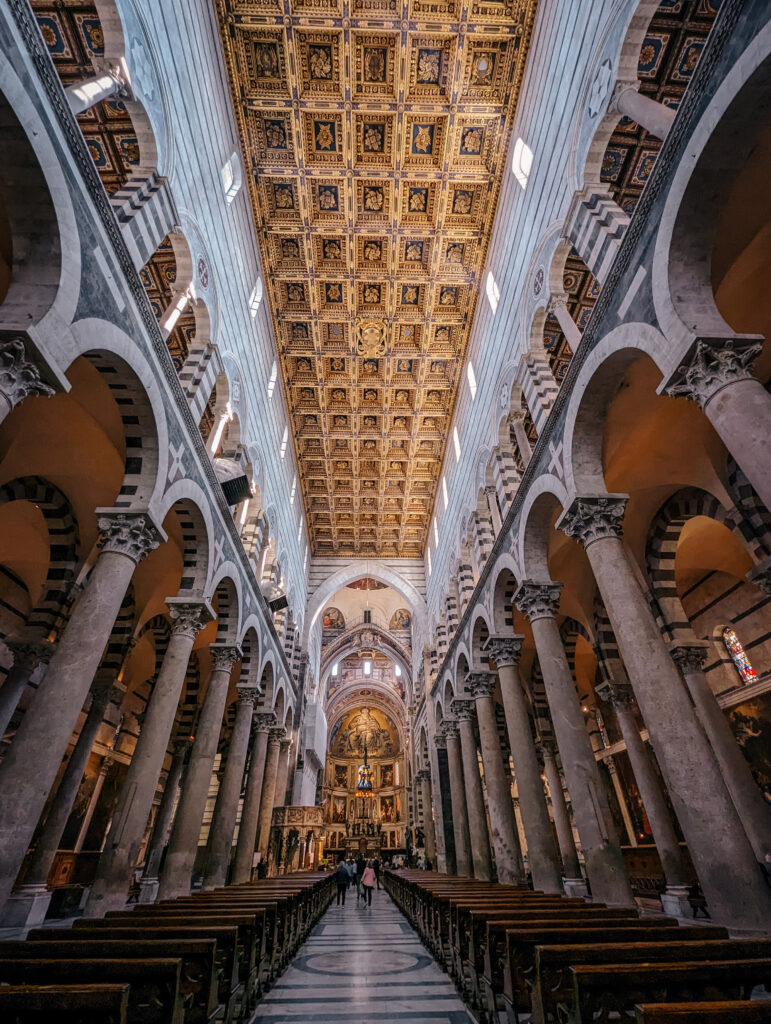
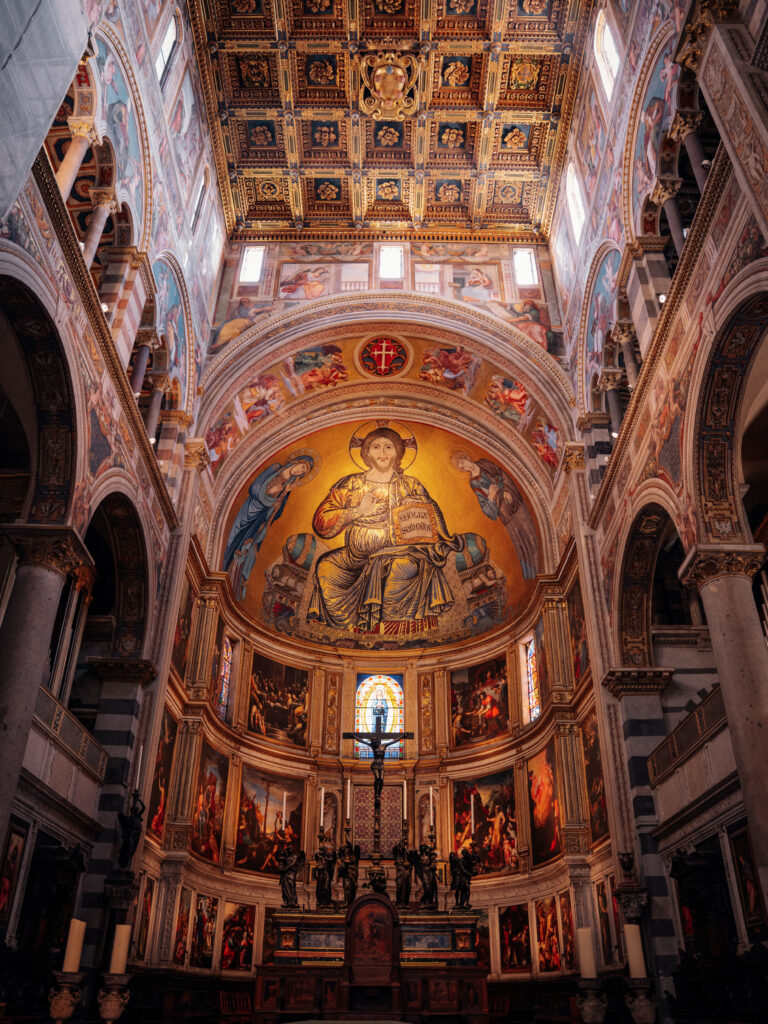
Our last monument before the museums was the Cattedrale di Pisa. This massive cathedral was consecrated in 1118. Much of this structure consists of materials that were taken from Roman monuments to build it. The stark white building with its many intricate details is truly beautiful.
In 2015, the cathedral underwent many restoration works, and it reopened in 2018. Today it is a popular spot among tourists and those who come for religious ceremonies and prayer.
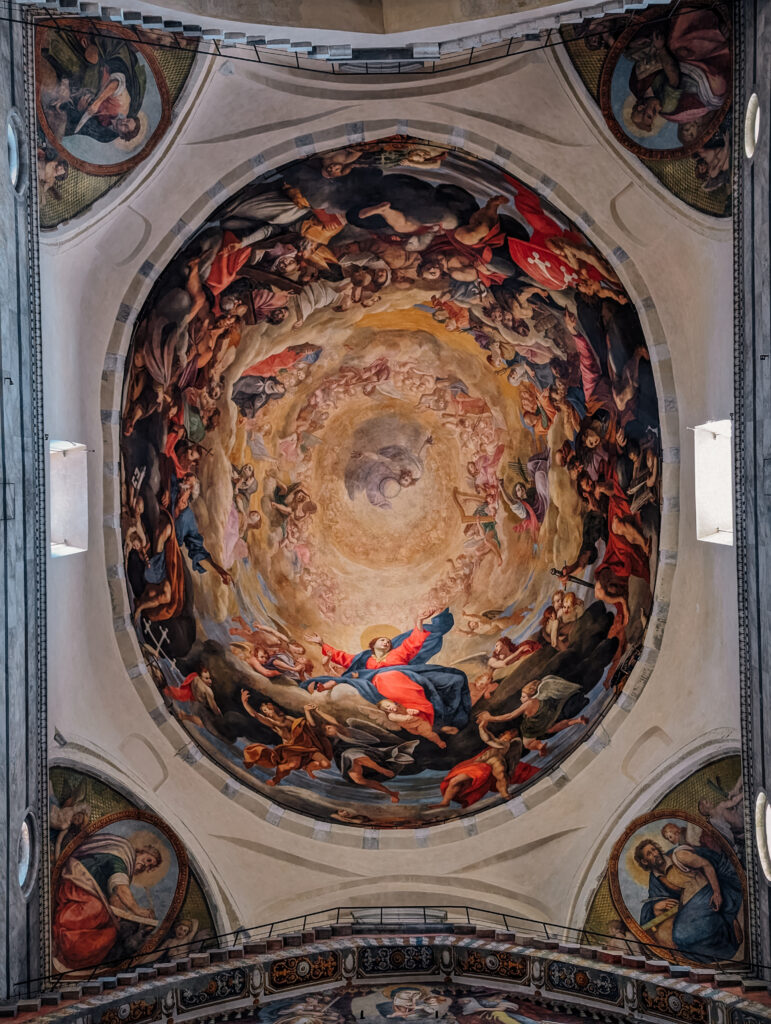
Opera Del Duomo Museum
Next, we headed into the Opera Museum. After leaving the piazza bustling with people taking photos in front of the Leaning Tower of Pisa, we were honestly shocked at how quiet it was in there. We saw four other visitors during our whole visit.
The museum consists of exhibits covering the evolution of the monuments, artwork, and various artifacts from beyond Italy. There are also some pretty views of the Leaning Tower from the upper floors of the building. There is an audio guide available for this museum if desired.
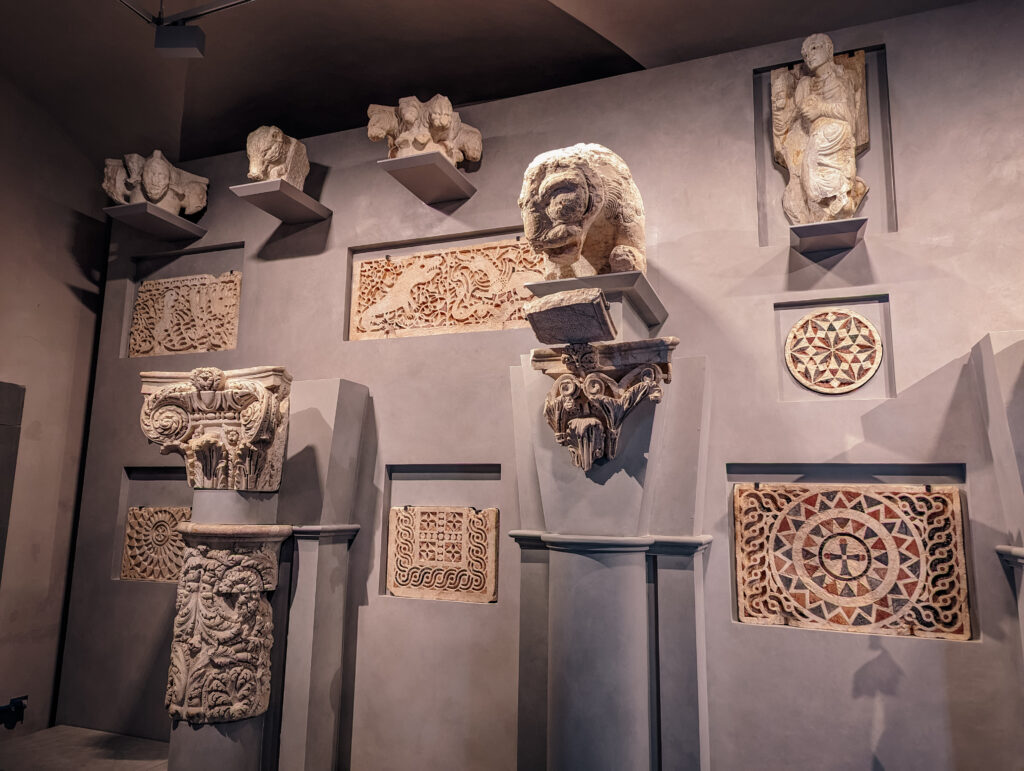

Sinopie Museum
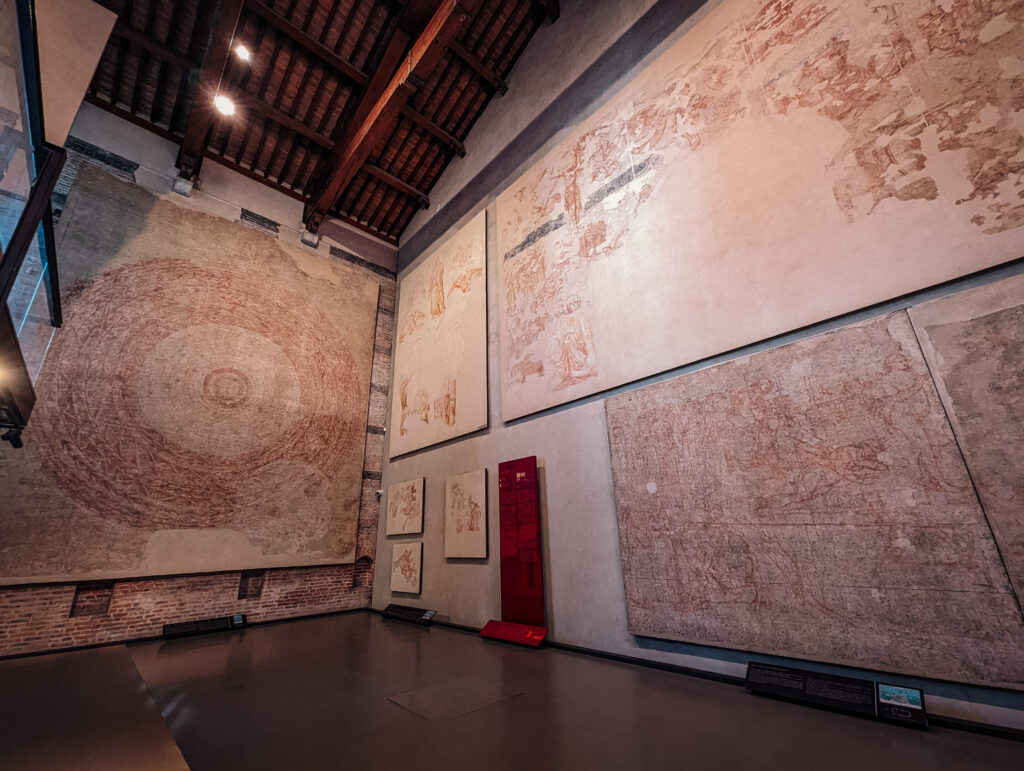
Our last stop at the Piazza del Duomo was the Sinopie Museum. Sinopia is a reddish earth pigment that artists used to draw a sketch/outline of their piece on plaster. They would then paint over the sketch to create beautiful frescoes. Frescoists commonly used this method, including when creating the New and Old Testament scenes that adorn the Camposanto. Many of the sinopia drawings held in this museum were discovered when trying to save what remained of the frescoes in the Camposanto after a fire.
It was pretty interesting to see the original drawings and learn of this method, as we hadn’t heard of sinopias before. This museum also had a video section that detailed the efforts that went into stabilizing the Leaning Tower. The museum is small, but worth a visit!
Extra Notes on Visiting the Leaning Tower of Pisa & Other Monuments
The Order of Visiting the Monuments: We visited both museums last because we wanted to experience the tower, Camposanto, cathedral, and baptistery earlier in the morning before it got too crowded. We have no regrets on this aspect because we were able to visit these sites without many crowds at all and the museums were very quiet, even in the afternoon.
The only aspect that made us question whether visiting the museums first would be better is the fact that you’ll get more historical context and information on the monuments before you visit them. So, plan your visit to each based on what you think would suit you best!
The Lines: With this being the most popular thing to do in Pisa, expect lines. On a weekday morning in February, we only encountered a line at the entrance to the Leaning Tower and a short one to get into the baptistery. Though we didn’t find it too busy in the morning, later in the day, the plaza was very crowded. The square and all of the sites get much busier in the summer.
Dress Accordingly: As mentioned above, visitors must wear church-appropriate clothing to visit some of the sites. We’d also recommend wearing comfortable shoes if you plan to climb the tower and walk around all the monuments. Depending on the time of year, we’d recommend some layers as well. Being there in February, it was a bit windy and chilly outside, especially at the top of the tower.
Like this Post? Pin it!